In working with our parts who stayed in denial no matter what we showed them as evidence, we found that reframing the word denial has been most effective.
Denial is an automatic response of the brain, but it can feel like a structural defect and when evidence (i.e. memories, feelings, having DID…) tells you something, saying no can feel a lot like being unreasonable (in the sense that you cannot admit what’s right in front of you), childish (remember the kid who broke the vase and said “it’s not me”) or simply being unwilling to heal.
We have found that parts who are in denial are often shamed or feeling shame. It can come from the sense that they are “hindering” the healing process. They can sound “difficult” and refusing what’s “true”. They can antagonize other parts and dig their heels into their denial as a result.
As such, it was very useful to reframe denial parts as wish parts. Parts who are created by the brain with deep denial or parts who go back and forth into denial often have a lot to lose in their hopes and dreams. (Please note that this excludes denial programs in the context of RAMCOA which are another topic.)
In many ways, it is a way to say “if I am this, I will be [loved, accepted, cared for, respected, seen, alive].” The wish can be multiple. In our life for example, multiple wish parts were created by the brain wishing our father would love us. Some other wish parts were created wishing we could have a stable career and that what happened to us would not hinder our future in any way. Our host back in the day was created with the unrealistic but beautiful wish that we could do it all and were unbreakable. The list goes on and can be very creative. The parts in denial often do not choose the dream but they embody it.
Why a wish? Because a lot of this stems from magical thinking. If I wish it loud enough, it will make it true. I just have to wish it loud enough for someone to hear. If it’s still not true and people are telling me it’s false, I’m just not hoping hard enough.
Wish parts are made for the system to function better, they strive in the hope that is required for the system to function. It doesn’t really matter if the hope is never going to come true, it only matters that there is hope and a reason to be alive. Wish parts are very closely connected with suicidality as a result.
When healing starts and in our case, when therapy started, the problem was that many of these hopes and wishes were blown to pieces.
My father had died, without ever being made aware of our situation and could not love us for who we were – ever. But he did indeed love the “fake persona” that the wish parts created, reinforcing that this was the way forward and healing was a bad idea (we’d lose his love).
My career was made complicated by the amount of healing required to help sustain me. There is simply no going around that.
We cannot do it all (without falling apart).
But wish parts rebel. They try to show us that in the past, it worked. They feel they will die with their wish and destroying their dream makes them suicidal and desperate. The wish kept them (us) alive.
Helping them worked in four steps:
- identify the wish, identify what they dream about, what they desire so badly inside their heart. Identify what hope they as parts were created for and embody.
- Validate the dream. It usually makes perfect sense. It is normal (and healthy) to dream for a better life than the one you had. It kept you alive for another day and that matters.
- Identify how this dream is no longer valid. Has the person died? How is this dream no longer serving you? How can you thank it for its help and kindly put it to rest? What emotions come up?
- Find a new dream. What kind of new dream can you hope for in the future? What is your new hope? What is it that will help you wake up tomorrow?
As an example, for parts who were in the past created to be loved by our dad, they said that their new dream was to find love for themselves. They no longer wanted to rely on my dad for validation but they still had a long way to go before loving themselves. So that was the new dream and hope. Finding a way to be together and accepting ourselves.
For parts who were dreaming about our career being perfect, the new dream is to not let our career dreams get in the way of our healing journey. It flips it around and it’s a lot more manageable.
Regarding doing it all, our new dream would be to recognize how much we do in a day and to recognize how hard our life currently is and how much of an effort we already put in. Our new dream is also to claim our humanity and our limitations as being ok. Not a mistake or a lack of will, just a normal Tuesday.
By doing this we let wish parts slowly come towards a new life and they still serve the purpose they always had: to keep us wishing, hoping for a better tomorrow.
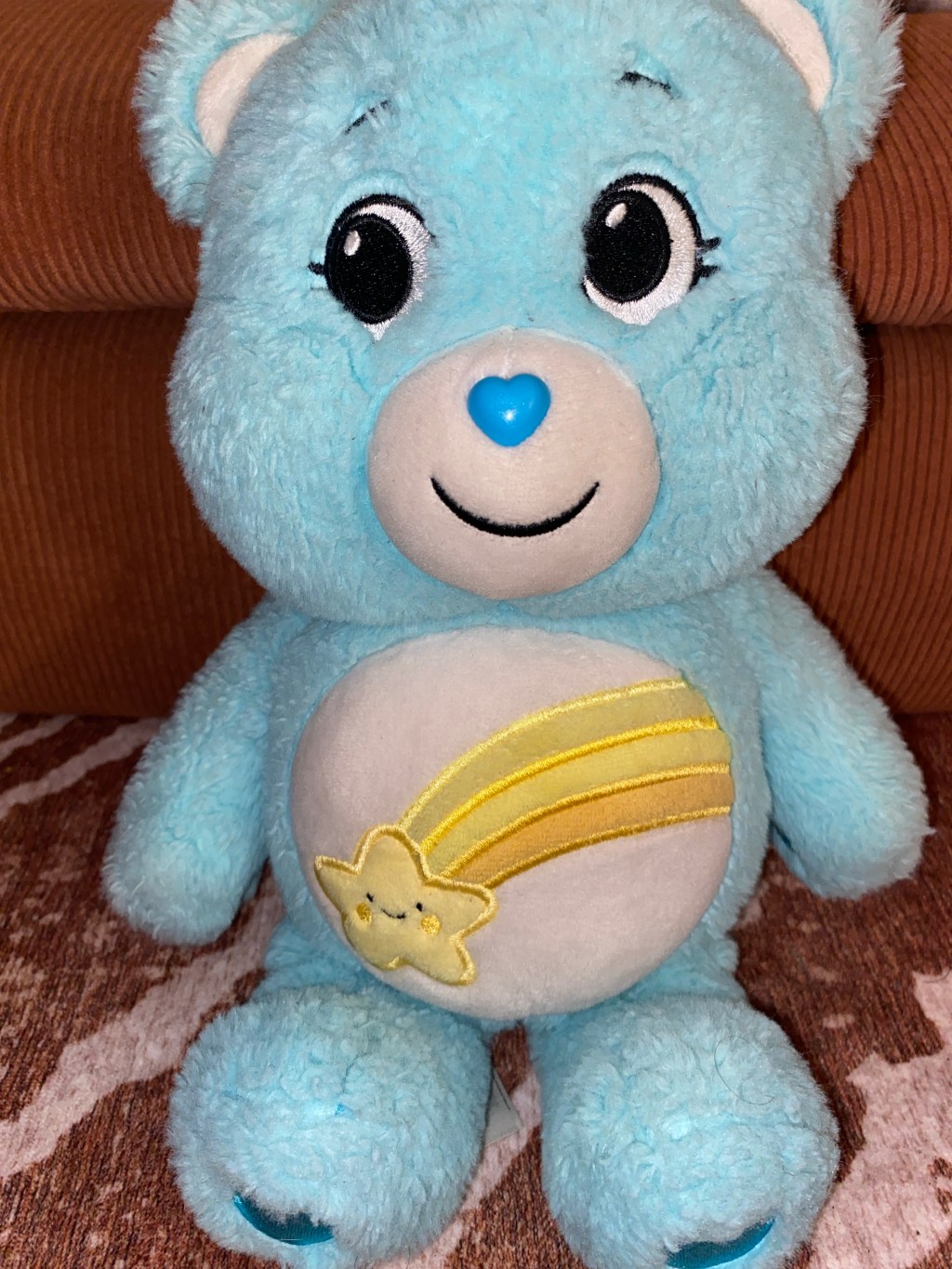
We have, in the context of this reframing, bought ourselves a wish bear (in the picture) to honor these parts and the wishes and dreams we had along the way. It’s their teddy bear.
Please note that this word and process was coined by us and you can use it in your healing journey or practice but it really matters to us to remind you that it is copyrighted. Thank you.
 System of Gardens & Flowers
Leave a comment